
New Construction Gutters Calgary: Builder's Checklist

Every builder knows that eavestrough decisions made during framing cannot be easily reversed after siding and fascia installation. In Calgary, where a single summer storm can dump 30mm of rain in an hour and winter freeze-thaw cycles test every joint, the cost of retrofitting inadequate gutter systems often exceeds the original installation by 60%. For new construction gutters Calgary projects, proper planning at the design stage saves thousands and protects your reputation with homeowners who expect systems built for Alberta's extreme weather patterns.
Table of Contents
Quick Takeaways
Key Insight
Explanation
6-inch systems are standard for Calgary
5-inch gutters cannot handle snowmelt volume from typical Calgary roof pitches during chinook events
Fascia installation precedes eavestrough
Aluminum-wrapped fascia must be complete and level before seamless gutter fabrication begins
Coordinate before siding installation
Eavestrough hangers require access to rafter tails that siding covers, making retrofit installation 40% more expensive
Grade away from foundation first
Even perfect gutters fail without 6-inch drop over 10 feet from foundation perimeter
Seamless fabrication requires site access
Mobile fabrication equipment needs 20-foot clearance and level ground within 50 feet of installation points
Protection systems save callbacks
Gutter guards installed during construction eliminate 80% of maintenance complaints in first five years
Downspout location affects landscaping
Plan discharge points with landscaper before concrete, pavers, or garden bed installation
Sizing Specifications for Alberta Climate
The standard 5-inch residential gutter that works in moderate climates consistently fails in Calgary. The data from insurance claims shows that undersized systems account for 35% of water damage claims in homes less than five years old. When a chinook melts accumulated snow on a 2,000 square foot roof in a single afternoon, 5-inch gutters overflow at every corner and valley.
Oversized 6-inch systems provide 40% more capacity and handle peak flow rates during rapid snowmelt events. This is not about aesthetics or future-proofing. It is about matching system capacity to measured flow rates from typical Calgary roof areas during documented weather events.
In practice, we specify 6-inch gutters for any roof section exceeding 800 square feet of drainage area. Valleys concentrating flow from multiple roof planes require 6-inch regardless of individual section size. The material cost difference between 5-inch and 6-inch seamless aluminum is $2.80 per linear foot, but the callback cost for overflow damage starts at $1,500 for fascia repair alone.
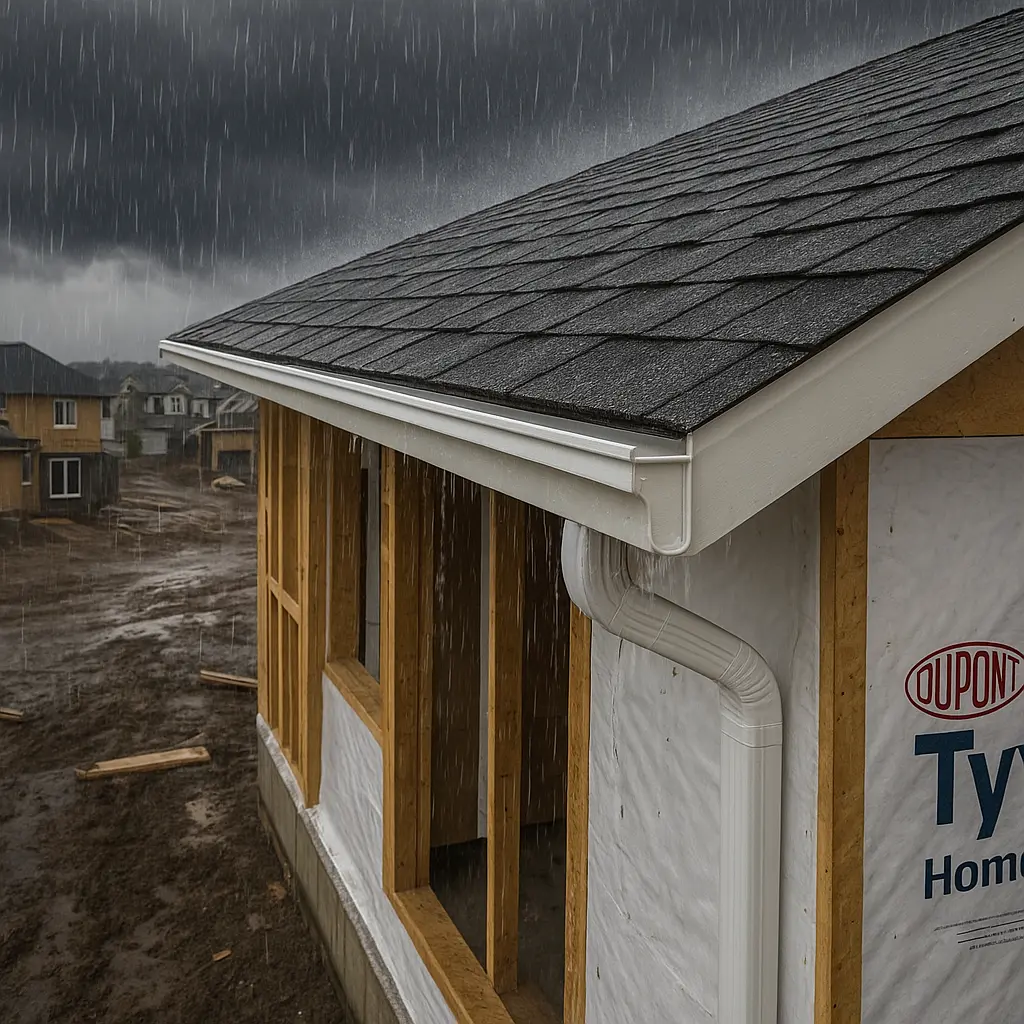
Downspout Diameter and Spacing
Standard 2x3-inch downspouts restrict flow from 6-inch gutters. The cross-sectional area creates a bottleneck that negates the capacity advantage. We install 3x4-inch downspouts exclusively on 6-inch systems, with maximum spacing of 35 feet between outlets.
A common mistake is using builder-grade spacing formulas from other regions. Calgary's weather patterns demand one downspout for every 600 square feet of roof area, not the 800-1000 square feet used in regions without rapid snowmelt events.
Pro tip: Mark downspout locations on foundation plans before concrete pour to coordinate drain tile connections and avoid conflicts with window wells or utility penetrations.
Fascia and Soffit Coordination
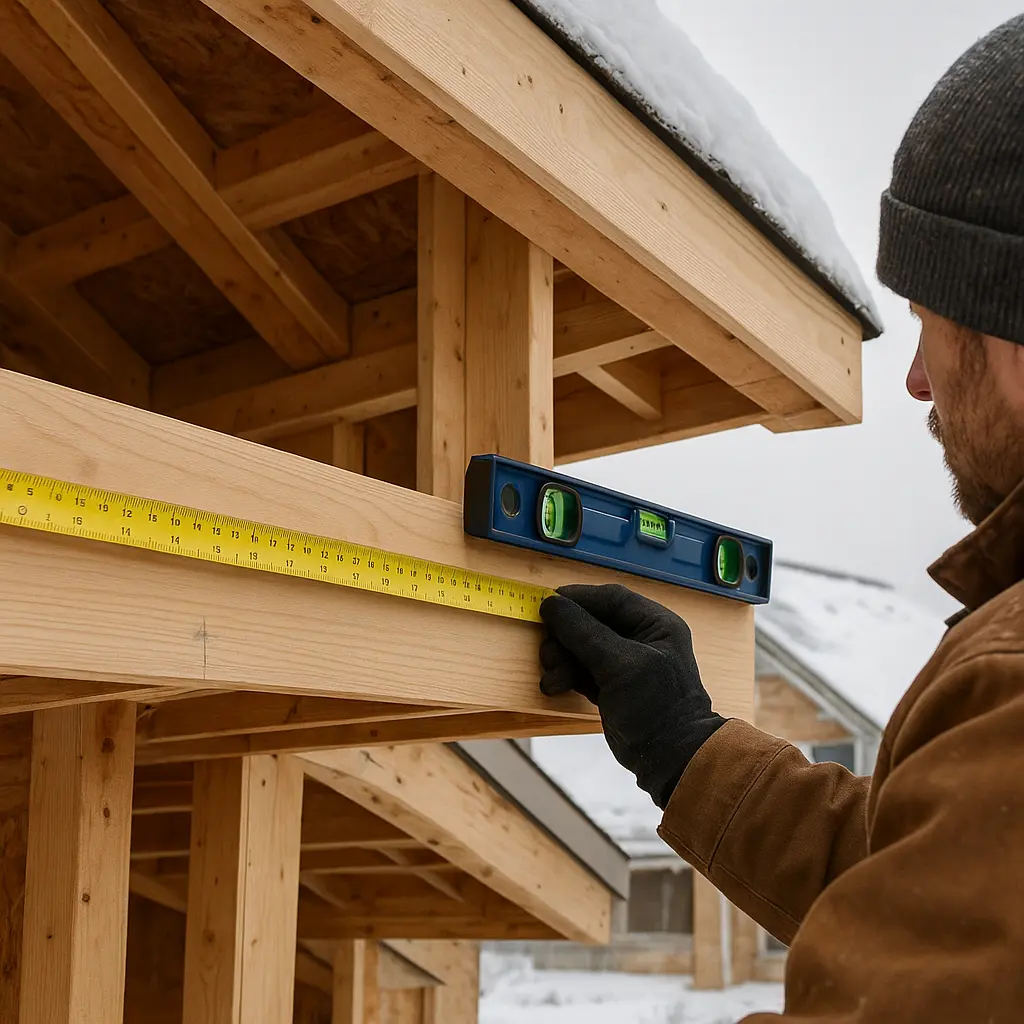
Eavestrough installation depends on completed fascia work. The fascia board provides the mounting surface and must be level, properly flashed, and aluminum-wrapped before gutter fabrication begins. This sequencing creates the most common scheduling conflict in new construction projects.
Framers often leave fascia boards with 1/4-inch to 1/2-inch variations over 20-foot runs. These variations telegraph directly into gutter pitch and create low spots where water pools. We require fascia within 1/8-inch level tolerance across each gutter run, which means coordination with framing crews before soffit and siding trades arrive.
Aluminum Fascia Wrapping
Pre-wrapped fascia or site-applied aluminum capping must be complete before residential gutter installation. The aluminum provides a clean, weather-resistant mounting surface for hidden hangers and prevents the fastener back-out that occurs with direct wood mounting during thermal cycling.
Soffit installation timing matters less than fascia, but affects access for hanger installation at rafter tails. On two-story homes, coordinate soffit completion to leave hanger mounting points accessible until gutter crews finish.
Installation Sequence
Builder Action Required
Timing Impact
Fascia board installation
Verify level within 1/8-inch tolerance, confirm proper flashing at roof edge
Must precede aluminum wrapping by minimum 2 days for inspection
Aluminum fascia capping
Complete wrapping on all elevations scheduled for gutters, leave no exposed wood
Required before eavestrough fabrication appointment
Soffit installation
Coordinate with gutter crew to maintain hanger access at rafter tails
Can proceed simultaneously with gutters on single-story, must precede on two-story
Gutter Protection Systems
Installing gutter guards during new construction costs 60% less than retrofit installation and eliminates the most common homeowner maintenance complaint. In Calgary's urban forest areas with mature poplars and spruce, unprotected gutters require cleaning three times annually. Homeowners who skip this maintenance face ice dam formation and overflow damage within two seasons.
The argument that guards add unnecessary cost ignores the warranty callback reality. A single spring overflow incident that stains new siding or saturates landscaping costs more than protection systems on the entire home. We include micro-mesh guards in all builder eavestrough services proposals because the five-year callback rate drops from 23% to under 4%.
Mesh vs. Screen vs. Reverse Curve
Micro-mesh aluminum systems with stainless steel mesh inserts outperform both perforated aluminum screens and reverse-curve designs in Calgary conditions. Screen holes large enough to prevent ice blocking also admit seed pods and aspen catkins. Reverse-curve systems create ice shelves during freeze-thaw cycles that redirect water behind the gutter.
The data consistently shows that surgical-grade stainless mesh with 50-micron openings stops debris while allowing water through during rain and snowmelt. These systems cost $8-12 per linear foot installed during construction, compared to $18-25 per foot for retrofit with gutter removal and reinstallation.
Pro tip: Specify UV-resistant aluminum frames for gutter guards rather than plastic alternatives that become brittle and crack within three years under Calgary's high-altitude sun exposure.
Drainage Planning and Grading
Perfect gutters fail without proper site drainage. The building code requires 6 inches of drop over the first 10 feet from the foundation, but many builders grade to minimum specification and create perpetual moisture problems. Clay soils common in Calgary suburbs compact and settle, reducing effective slope within the first year.
We coordinate downspout discharge points with landscaping and drainage plans before rough grading begins. Downspouts that empty onto planned paver patios or garden beds create conflicts that force expensive underground drainage solutions after landscape installation.
Underground Drainage Connections
Connecting downspouts to perimeter drains or storm sewers eliminates surface water and prevents soil saturation near foundations. This connection requires coordination during foundation and rough grading stages, not as an afterthought during final grading.
In practice, we install 4-inch solid PVC from each downspout location to the property storm connection or a dry well minimum 15 feet from the foundation. The cost during excavation and backfill stages is $180-250 per downspout. Trenching through finished landscaping increases this to $600-900 per location.
Proper drainage planning during pre-construction prevents 80% of foundation moisture complaints and eliminates the need for expensive remediation within the warranty period.
Material Selection Standards
Seamless aluminum in 0.032-inch thickness is the baseline for new construction gutters Calgary projects. Thinner 0.027-inch material saves $1.20 per foot but dents during ladder contact and installation of seasonal lighting. Thicker 0.032-inch withstands normal homeowner use without permanent deformation.
Color selection affects performance beyond aesthetics. Dark colors absorb heat and expand more during summer sun exposure, requiring expansion joints every 40 feet instead of 50 feet for lighter colors. White and almond finishes reflect heat and maintain dimensional stability through temperature swings from negative 30C to positive 30C.
Hanger Spacing and Fastener Type
Hidden hangers spaced every 24 inches provide adequate support for 5-inch gutters in moderate climates but fail under snow and ice loading in Calgary. We specify 18-inch spacing on 6-inch systems to distribute weight from snow accumulation and prevent the sagging that creates reverse pitch.
Stainless steel screws into rafter tails outperform aluminum spikes and ferrules by a factor of four in pull-out testing. The cost difference is $0.35 per hanger, but the performance difference prevents the progressive sagging that creates standing water and ice dam formation.
Builder Eavestrough Services Integration
Successful builder eavestrough services integration requires scheduling flexibility and clear communication protocols. Eavestrough installation falls between exterior finishing trades and final grading, creating coordination challenges on every project.
We provide builders with a three-point coordination checklist: fascia completion verification, site access confirmation for fabrication equipment, and downspout discharge location approval. Projects that complete this checklist before scheduling achieve single-visit installation 94% of the time. Projects that skip coordination average 1.7 return visits to complete work.
Mobile Fabrication Requirements
Seamless gutter fabrication happens on-site using mobile equipment that produces continuous lengths up to 100 feet. This equipment requires level ground within 50 feet of installation points and 20-foot clearance for the fabrication trailer. Scheduling eavestrough work after landscaping or driveway installation often creates access problems that force sectional installation with unnecessary seams.
In practice, the ideal installation timing is after fascia and soffit completion but before final grading and landscaping. This provides equipment access while ensuring proper mounting surfaces are ready.
Warranty Coordination
Material and workmanship warranties for residential gutter installation must align with overall home warranty periods. We provide 10-year material warranties on aluminum gutters and 5-year workmanship warranties on installation, matching typical builder warranty timelines and eliminating gaps in coverage.
Documentation matters for warranty claims and homeowner transfers. We photograph completed installations from multiple angles, document all mounting points, and provide builders with detailed diagrams showing downspout locations and drainage connections.
Pro tip: Include eavestrough system diagrams in homeowner closing packages with maintenance recommendations and warranty contact information to reduce builder callbacks for normal maintenance issues.
Frequently Asked Questions
When should eavestrough installation be scheduled in the construction timeline?
Schedule eavestrough installation after fascia and soffit completion but before final grading and landscaping. This provides necessary mounting surfaces while maintaining equipment access for seamless fabrication. Most projects achieve optimal timing by coordinating installation two weeks before landscape contractors begin work.
What is the cost difference between 5-inch and 6-inch gutter systems?
Material and installation costs for 6-inch seamless aluminum systems run $2.80 to $3.50 per linear foot more than 5-inch systems. On a typical 2,200 square foot Calgary home requiring 160 linear feet of gutters, the total cost increase is $450 to $560. This investment prevents overflow issues that cost $1,500 to $4,000 in damage repair and callback expenses.
Can eavestrough installation proceed if soffit work is incomplete?
Installation can proceed on single-story homes where installers can access rafter tails from ladders. Two-story installations require soffit completion first because hanger installation at rafter tails becomes inaccessible once soffit panels are installed. Coordinate this sequencing during scheduling to avoid delays.
How do you prevent ice dam formation in Calgary winters?
Ice dam prevention requires adequate attic insulation and ventilation, not just proper gutters. However, oversized 6-inch gutters with proper pitch and gutter protection systems reduce ice accumulation compared to undersized systems that trap water and debris. Ensure R-50 attic insulation and continuous soffit to ridge ventilation as primary prevention, with proper eavestrough sizing as secondary protection.
What warranty coverage should builders expect for new construction gutters?
Standard coverage includes 10-year material warranties on aluminum components and 5-year workmanship warranties on installation. This covers manufacturing defects, finish degradation, and installation failures but excludes damage from ladder impact, ice loading beyond design specifications, or lack of maintenance. Verify warranty terms align with your builder warranty period to prevent coverage gaps.
How many downspouts does a typical Calgary home require?
Calculate one downspout for every 600 square feet of roof drainage area in Calgary, compared to 800-1000 square feet used in regions without rapid snowmelt events. A typical 2,200 square foot home requires minimum six downspouts properly distributed around the perimeter. Homes with complex roof lines or valley concentrations require additional outlets at high-flow points.
What has been your experience coordinating eavestrough installation on new construction projects, and what scheduling challenges have you encountered?


Comments