
5 Signs Your Calgary Home Needs Fascia Repair Before Summer

Calgary homeowners spend an average of $8,000 to $15,000 repairing structural damage caused by neglected fascia and soffit systems. The harsh freeze-thaw cycles, Chinook winds, and sudden temperature swings in Southern Alberta accelerate exterior deterioration faster than in most Canadian cities. Catching fascia and soffit damage before summer means avoiding water infiltration, pest infestations, and costly structural repairs during peak contractor season. In practice, the five warning signs below indicate immediate attention is required, and delaying repairs past spring increases both expense and risk exponentially.
Table of Contents
Quick Takeaways
Key Insight
Explanation
Moisture staining indicates active water infiltration
Dark streaks or discoloration on fascia boards signal water penetrating behind your eavestrough system, leading to rot and structural damage within months
Peeling paint exposes wood to Alberta's extreme weather
Once the protective paint layer fails, fascia boards absorb moisture during spring melt and summer storms, accelerating decay rates by 300% or more
Sagging soffits compromise attic ventilation
Damaged soffit panels block intake vents, trapping heat and moisture in your attic space, which increases cooling costs and promotes mold growth
Visible pest activity requires immediate fascia inspection
Birds, squirrels, and wasps target deteriorated soffit gaps for nesting, causing additional structural damage and creating health hazards
Separated eavestroughs cause fascia failure
When gutters pull away from fascia boards, the mounting system has failed, allowing water to cascade directly against your home's exterior walls and foundation
Spring repairs cost 25-40% less than emergency summer fixes
Scheduling fascia repair Calgary services before peak season means better contractor availability, lower rates, and preventing secondary damage to insulation and framing
Calgary's freeze-thaw cycles triple damage progression
Water trapped in fascia cracks expands during overnight freezing, widening gaps exponentially, especially during March and April temperature swings
Visible Rot and Moisture Staining on Fascia Boards
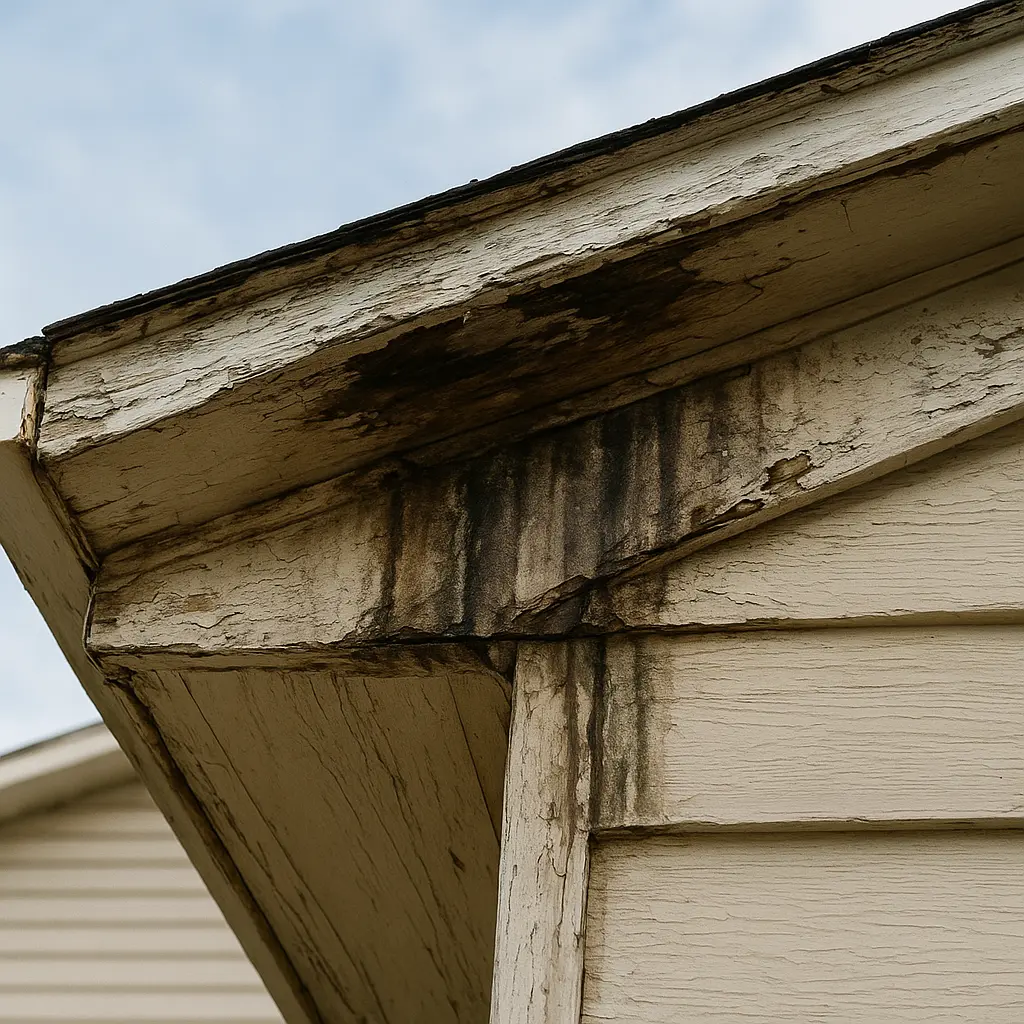
Dark vertical streaks running down your fascia boards indicate water overflowing from clogged eavestroughs or seeping through damaged flashing. These stains appear most commonly on south and west-facing exposures where Calgary's intense UV radiation and Chinook winds concentrate moisture damage. The wood beneath these stains has already begun absorbing water, and the cellular structure starts breaking down within 60 to 90 days of continuous exposure.
Physical rot presents as soft, spongy areas when you press against the fascia with moderate finger pressure. A screwdriver test, where the blade penetrates more than 1/4 inch into the wood surface, confirms structural compromise. According to the Canadian Wood Council, once rot penetrates beyond the surface layer, replacement rather than repair becomes necessary because fungal decay spreads internally through wood grain even when surface conditions appear dry.
Calgary's spring conditions create ideal rot environments. Daytime temperatures melt accumulated snow and ice, saturating fascia boards, while nighttime freezing prevents proper drying. This cycle repeats 40 to 60 times between February and April in Southern Alberta, accelerating deterioration rates far beyond what homeowners in more temperate climates experience.
Pro tip: Inspect fascia boards immediately after a Chinook event when rapid temperature changes cause ice dam formation and sudden melt conditions that expose hidden moisture damage.
Peeling Paint and Cracked Fascia Surfaces
Paint failure on fascia boards signals moisture penetration from behind the painted surface. Water vapor escaping from your attic space or seeping through eavestrough joints pushes outward, breaking the paint's adhesion to the wood substrate. Once this protective barrier fails, bare wood absorbs rainfall and snowmelt directly, creating a self-accelerating damage cycle that can destroy fascia boards within a single season.
Horizontal cracks running parallel to the ground indicate wood shrinkage from repeated wet-dry cycles. Vertical cracks perpendicular to the roofline suggest structural stress from improperly secured eavestroughs or fascia pulling away from rafter tails. In practice, cracks wider than 1/8 inch allow insect infiltration and provide entry points for moisture that rapidly expands during freezing conditions.
Material Deterioration Patterns Specific to Alberta
Wood fascia exposed to Calgary's climate without proper maintenance shows visible cracking within 7 to 10 years of installation. Aluminum and vinyl fascia systems resist moisture damage but develop stress cracks at fastener points where thermal expansion and contraction create metal fatigue. These cracks typically appear first on southwestern exposures receiving maximum solar heating followed by rapid nighttime cooling.
The data consistently shows that homeowners who address paint failure and surface cracking within one season avoid fascia replacement costs averaging $2,800 to $4,200 for typical single-family homes. Delaying repairs for two or more seasons increases total project costs by 60% to 85% once structural framing damage occurs.
Pro tip: Schedule fascia inspection during early April when paint failure becomes most visible after winter moisture exposure but before summer's heat masks damage through temporary drying.
Soffit Sagging and Ventilation Gaps
Soffit panels sagging between support points indicate water damage, fastener failure, or inadequate ventilation causing moisture accumulation in the attic space. Properly installed soffit systems remain flat and tight against the underside of your roof overhang. Visible waviness, drooping sections, or panels hanging at angles signal immediate structural concerns that compromise your home's ventilation system.
Gaps between soffit panels and fascia boards create entry points for moisture, insects, and small animals. A common mistake is dismissing quarter-inch gaps as cosmetic issues when they actually allow wind-driven rain to penetrate behind your exterior protection system. Calgary's strong westerly winds during spring storms force water horizontally into these gaps, saturating insulation and wooden framing members that normally remain dry.
Blocked or damaged soffit vents eliminate intake airflow required for proper attic ventilation. Without adequate intake through soffit vents, your ridge or roof vents cannot exhaust hot air and moisture effectively. This creates temperature differentials that promote ice dam formation in winter and increase cooling costs by 15% to 25% during summer months.
Soffit Damage Type
Immediate Impact
Repair Timeline
Sagging panels with visible moisture staining
Active water infiltration damaging attic insulation, potential mold growth within 30 days
Immediate replacement required before next rainfall
Gaps between soffit and fascia boards
Pest entry points, wind-driven rain penetration, reduced energy efficiency
Repair within 2-4 weeks to prevent secondary damage
Blocked or damaged ventilation openings
Inadequate attic airflow, increased cooling costs, accelerated shingle aging
Address before summer heat to prevent attic overheating
Pest Activity and Nesting Signs in Soffits
Bird nesting materials, wasp colonies, and squirrel entry holes in soffit panels indicate existing structural damage that pests exploit for shelter. Animals do not create initial access points but rather enlarge small cracks, gaps, or deteriorated areas that already exist. Visible pest activity means your fascia and soffit system has failed its primary function as a weather and animal barrier.
Wasps and hornets build nests in soffit cavities during late spring and early summer, targeting homes with ventilation gaps or separated panels. These nests block airflow and introduce moisture from insect activity, accelerating wood rot. Removing nests without repairing the underlying soffit damage guarantees recolonization the following season because pests return to proven nesting sites.
Squirrels chew through deteriorated wood soffit to access attic spaces for winter shelter. A single entry hole measuring 2 to 3 inches diameter allows repeated access, and squirrels expand openings annually. The resulting damage extends beyond the immediate entry point as animals tear through insulation, chew electrical wiring, and compromise vapor barriers throughout your attic space.
Pest activity in soffit and fascia areas indicates the protective envelope has already failed. Addressing only the pest problem without repairing structural damage is like treating symptoms while ignoring the underlying disease.
Spring represents the critical intervention window before birds begin nesting and insects establish colonies. Calgary bylaws restrict pest control activities during active nesting periods, making early soffit replacement Alberta projects significantly easier from both a timing and regulatory perspective.
Eavestrough Separation from Fascia Boards
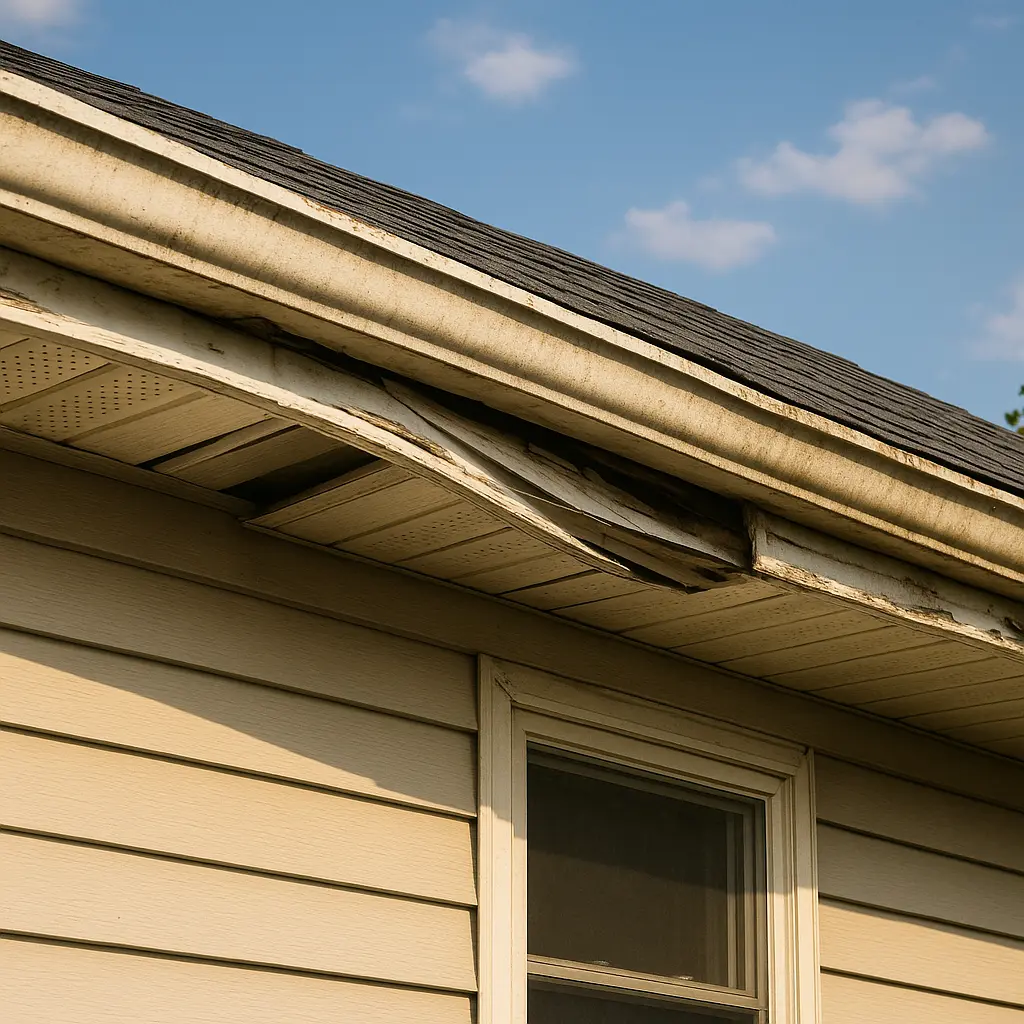
Gutters pulling away from fascia boards indicate either fastener failure, rotted mounting surfaces, or improper installation that cannot support the weight of water and debris. A properly functioning eavestrough system remains firmly attached to fascia with no visible gaps between the gutter back and the board face. Separation of 1/4 inch or more allows water to cascade behind the gutter, saturating both fascia and the wall structure beneath.
The mounting hardware for standard 5-inch eavestroughs fails when fascia boards rot at fastener points. This creates a cascading failure pattern where water leaking through one separated section accelerates rot in adjacent areas, progressively extending the damaged zone. Oversized 6-inch eavestrough systems designed for Alberta's heavy rainfall and rapid snowmelt require more robust fascia attachment, making underlying board integrity even more critical.
Load Factors Contributing to Fascia Damage
Ice accumulation in clogged eavestroughs during spring melt cycles adds 40 to 60 pounds of weight per linear foot to your gutter system. Standard fascia boards rated for normal eavestrough loads cannot support this additional weight, causing fasteners to pull through deteriorated wood or bend mounting brackets. This explains why eavestrough fascia damage appears most commonly after extended winter periods with multiple freeze-thaw events.
Water overflowing from separated eavestroughs erodes soil adjacent to your foundation, creates basement seepage paths, and stains exterior siding. The repair costs for these secondary issues typically exceed fascia repair Calgary expenses by a factor of three to five, making early intervention financially critical.
Pro tip: Inspect fascia attachment points during moderate rainfall to identify separation problems that may not be visible during dry conditions when boards temporarily return to their original position.
Why Calgary's Climate Makes Spring Repairs Critical
Temperature fluctuations between minus 15 and plus 15 degrees Celsius during March and April create maximum stress on fascia and soffit systems. Water trapped in cracks freezes overnight, expanding with enough force to split wood fibers and separate panel joints. This damage compounds daily throughout the spring transition period, making each week of delay significantly more expensive than the previous week.
Contractor availability drops sharply after May 1 as the peak exterior renovation season begins. Homeowners competing for fascia repair Calgary services during June through August face 25% to 40% higher labor rates and scheduling delays extending 6 to 8 weeks. Spring repairs completed in April provide immediate protection before summer storm season while securing better pricing and faster service timelines.
Material costs for fascia and soffit components remain relatively stable year-round, but labor efficiency drops during summer heat when installers work shorter hours to avoid heat stress. A typical fascia replacement project requiring 2 days in April conditions extends to 3 days during July heat waves, directly increasing labor expenses even at identical hourly rates.
Summer Storm Damage Risk Assessment
Calgary experiences an average of 12 to 15 severe thunderstorm events annually between June and September, delivering intense rainfall that overwhelms compromised eavestrough systems. Damaged fascia and soffit panels cannot redirect this water away from your home's structure, allowing penetration into wall cavities and insulation spaces. The resulting moisture damage requires extensive remediation averaging $12,000 to $18,000 compared to preventive fascia repair costs of $3,500 to $6,000.
Hail damage compounds existing exterior damage signs by creating new penetration points in already weakened fascia materials. Insurance claims for storm damage typically exclude pre-existing deterioration, meaning homeowners pay out-of-pocket for repairs to components that showed warning signs before the weather event occurred.
Frequently Asked Questions
How much does fascia repair cost for a typical Calgary home?
Fascia repair Calgary costs range from $2,800 to $6,500 for average single-family homes depending on material choice, extent of damage, and access difficulty. Partial repairs addressing isolated damage sections cost $800 to $1,500, while complete fascia replacement with aluminum materials runs $5,000 to $8,000. These prices reflect Southern Alberta labor rates and include proper eavestrough remounting. Homes requiring structural rafter tail repairs due to neglected fascia damage face additional costs of $3,000 to $7,000 for framing work.
Can I repair fascia boards myself or should I hire professionals?
DIY fascia repairs work for small isolated sections under 8 feet in length with easy ground-level access, but most Calgary homes require working at heights exceeding 20 feet with proper fall protection equipment. Professional installers complete fascia replacement 4 to 5 times faster than homeowners attempting first-time repairs, and warranty coverage requires certified installation. The liability risk from falls and the specialized tools needed for seamless eavestrough remounting make professional installation the practical choice for projects exceeding simple paint touch-ups.
What is the difference between fascia and soffit damage?
Fascia boards run vertically along your roofline, supporting eavestrough systems and providing the finished edge where your roof meets exterior walls. Soffit panels install horizontally underneath roof overhangs, enclosing the space between your home's exterior wall and the roofline while providing attic ventilation. Fascia damage typically results from water overflow and eavestrough issues, while soffit damage stems from moisture accumulation, inadequate ventilation, or pest infiltration. Both components work together as a protective system, and damage to one often indicates problems with the other.
How long does fascia and soffit replacement take?
Professional crews complete fascia and soffit replacement for standard single-family homes in 2 to 3 days under normal conditions. The first day involves eavestrough removal, damage assessment, and fascia board replacement. Day two covers soffit installation and ventilation integration. Day three handles eavestrough remounting, flashing installation, and final adjustments. Complex architectural details, extensive structural repairs, or poor weather conditions extend timelines to 4 or 5 days. Spring projects proceed faster than summer installations because cooler temperatures allow longer work periods and materials handle more easily.
Will insurance cover fascia and soffit repair costs?
Insurance coverage for fascia and soffit damage depends on the cause of failure. Sudden storm damage, hail impact, or falling tree limbs qualify as insurable events under most homeowner policies. Gradual deterioration from aging, inadequate maintenance, or normal wear explicitly falls outside coverage terms. Most Calgary insurers deny claims for rot, pest damage, or paint failure because these result from maintenance neglect rather than covered perils. Review your policy's exclusions and photograph existing conditions before storm seasons to document pre-existing versus new damage if claims become necessary.
What materials work best for fascia in Calgary's climate?
Aluminum fascia systems perform best in Calgary's extreme temperature swings, offering durability ratings of 30 to 40 years with minimal maintenance. Aluminum resists moisture damage, handles freeze-thaw cycles without cracking, and never requires painting. Vinyl fascia costs less initially but becomes brittle during extreme cold snaps below minus 25 degrees Celsius, leading to crack formation and reduced lifespan. Wood fascia wrapped with aluminum combines structural strength with weather protection but requires proper installation to prevent moisture trapping. Pre-finished aluminum in white or matching exterior colors provides the optimal balance of performance, longevity, and aesthetic options for Southern Alberta applications.
What signs of fascia or soffit damage have you noticed on your Calgary home, and when did you first spot these warning indicators?
References
Environment and Climate Change Canada weather data and historical climate information
Natural Resources Canada energy efficiency and building science resources
Forbes home improvement cost analysis and contractor selection guidance
Statista construction industry statistics and home renovation market data


Comments