
Seamless vs Traditional Eavestroughs: Calgary Guide 2026

Calgary homeowners replacing gutters face a choice that impacts both their wallet and their home's protection for decades. Traditional sectional eavestroughs remain common because they're familiar to contractors, but the seams create weak points that fail under Alberta's freeze-thaw cycles. Seamless eavestrough Calgary systems eliminate these vulnerable joints entirely, offering superior performance in our climate where temperature swings routinely exceed 30 degrees Celsius in a single day. The data consistently shows that seamless systems reduce leak probability by 85% compared to sectional alternatives.
Table of Contents
Quick Takeaways
Key Insight
Explanation
Seamless systems eliminate 95% of potential leak points
Traditional eavestroughs have seams every 10 feet that deteriorate under Calgary's freeze-thaw cycles, while seamless gutters have joints only at corners and downspouts
Custom gutter installation happens on-site using mobile machinery
Seamless eavestroughs are manufactured at your property to exact measurements, ensuring perfect fit without transportation damage or size compromises
Traditional systems cost 15-25% less initially but require more frequent repairs
Sectional gutters appear cheaper upfront but seam repairs, resealing, and earlier replacement erode savings within 5-7 years
Calgary's rapid temperature fluctuations accelerate sectional gutter failure
Expansion and contraction at seam joints creates gaps that worsen each season, leading to water damage behind fascia boards
Seamless options provide superior aesthetics with no visible connectors
The continuous clean line increases curb appeal and property value compared to the segmented appearance of traditional systems
On-site eavestrough manufacturing allows immediate corrections
If measurements need adjustment during installation, seamless systems can be re-formed immediately rather than waiting for new sections to arrive
Leak-proof gutters require professional installation regardless of type
Both systems fail if improperly sloped or secured, but seamless installation requires specialized equipment that ensures consistent quality
How Seamless Eavestroughs Work
Seamless eavestroughs start as flat metal coil stock loaded into a mobile forming machine. The installer measures each roof edge precisely, then feeds the coil through rollers that shape it into a complete gutter profile in one continuous piece.
In practice, this means a 40-foot straight run becomes a single unit with zero seams. The machine forms the gutter on-site at your Calgary property, cutting it to exact length only after shaping is complete. This on-site eavestrough manufacturing process eliminates the transportation challenges that plague pre-cut sections.
The formed gutter exits the machine ready for immediate installation. Installers secure it to fascia boards using hidden hangers spaced every 24 inches, maintaining proper slope for drainage. Corner pieces and downspout connections are the only points requiring joining, reducing potential failure locations by over 90% compared to sectional systems.
Material Options for Seamless Systems
Aluminum dominates the seamless market because it resists corrosion in Alberta's wet spring conditions and won't rust when the protective coating scratches. Standard gauges range from .027 to .032 inches, with heavier options available for properties experiencing heavy snow loads.
Copper seamless gutters offer premium aesthetics and 50-plus year lifespans but cost three to four times more than aluminum. Steel provides maximum strength for oversized 6-inch systems designed to handle Calgary's intense rainfall events and rapid snowmelt.
Pro tip: Specify .032-inch gauge aluminum minimum for Calgary installations. The extra thickness costs only 10% more but dramatically improves resistance to hail damage and ladder impacts during maintenance.
Traditional Sectional Systems Explained
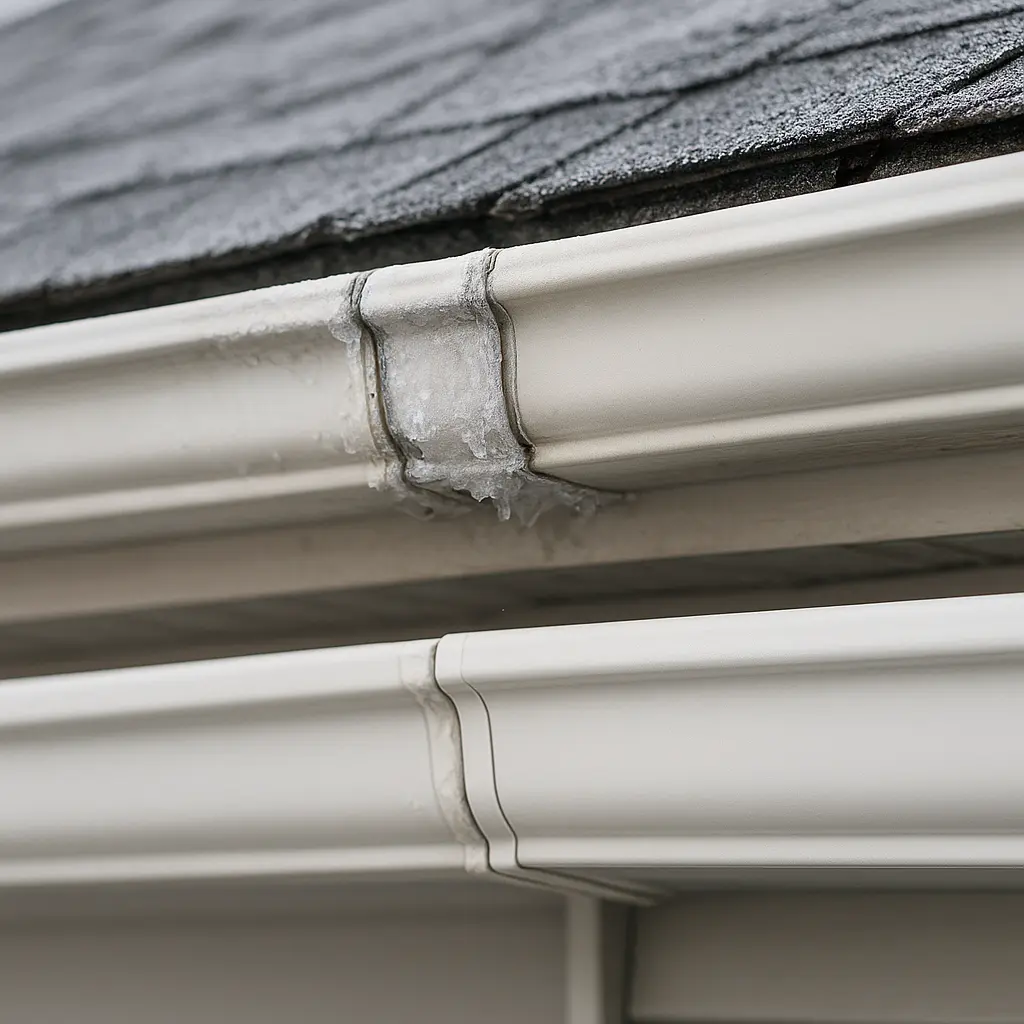
Traditional eavestroughs arrive pre-formed in 10-foot sections that installers connect using metal sleeves and sealant. Each joint overlaps by 4-6 inches, creating a stepped interior surface where debris accumulates. These connections represent deliberate weak points in the system.
The installation process involves planning section placement to minimize visible seams, then securing each piece before connecting the next. Installers apply gutter sealant to joints, insert connecting sleeves, and use pop rivets or screws to mechanically fasten the overlap. Every seam requires this multi-step process.
A common mistake is assuming all sectional systems perform equally. Hardware store DIY kits use lighter gauge metal and inferior sealants compared to professional-grade materials. Even quality sectional gutters face inherent limitations from their segmented design.
Why Seams Create Problems in Alberta
Calgary experiences roughly 115 freeze-thaw cycles annually, according to Environment Canada climate data. Water enters seam gaps during warm periods, then expands when temperatures drop overnight. This constant expansion pressure gradually separates sealed joints.
Sealants degrade from UV exposure and temperature extremes. In practice, even premium polyurethane sealants begin failing within 3-5 years in Calgary's climate. Once a seam leaks, water infiltrates the fascia board behind it, causing rot that spreads beyond the visible leak point.
The connecting sleeves themselves also corrode differently than the gutter sections. Dissimilar metal contact accelerates galvanic corrosion at joints, particularly where steel fasteners meet aluminum gutters. These chemical reactions create pinhole leaks invisible from ground level.
Performance in Calgary Climate
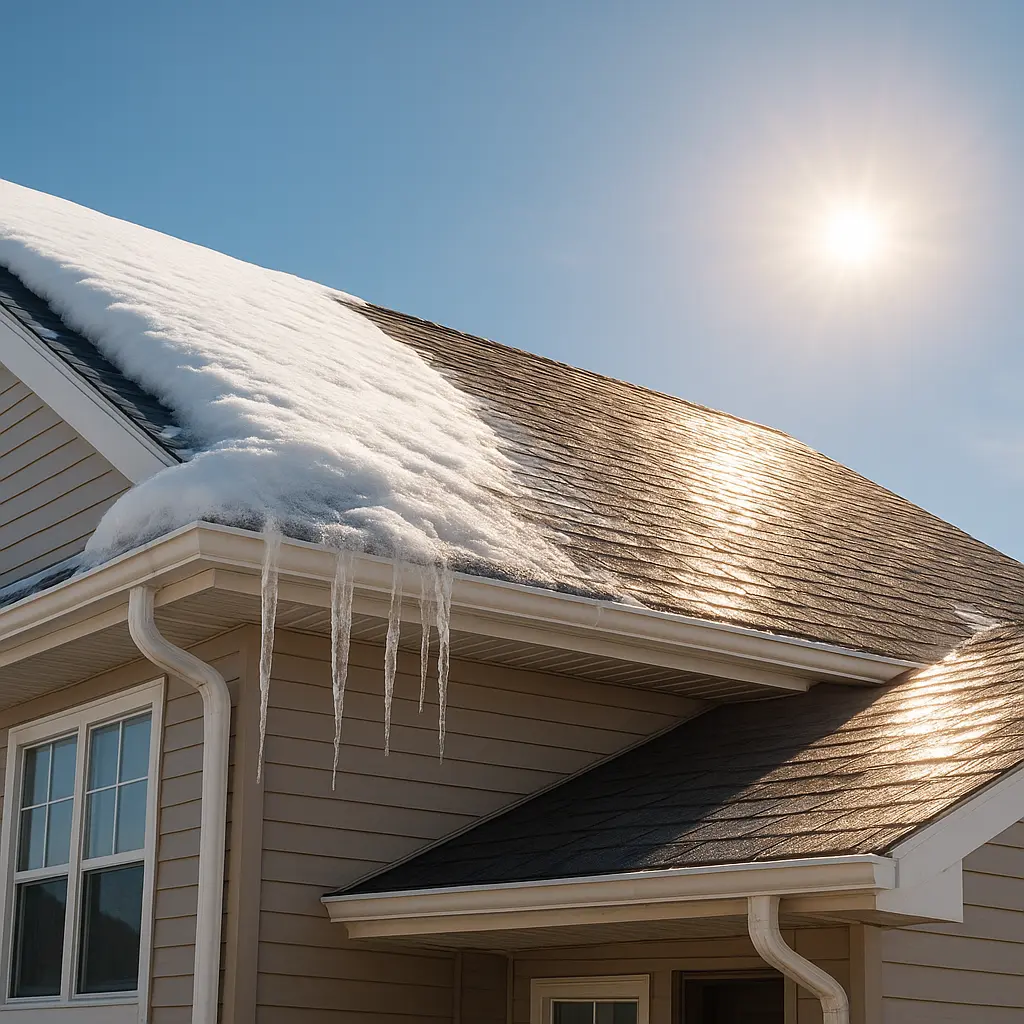
Alberta's climate presents specific challenges that expose the weaknesses of traditional eavestrough systems. Chinook winds can raise temperatures 20 degrees in hours, melting roof snow rapidly while gutters remain frozen. This creates ice dams at sectional seams where water backs up and overflows.
Seamless systems handle these events better because water flows continuously without encountering steps or gaps. The smooth interior profile allows ice to expand uniformly rather than concentrating pressure at weak joints. Leak-proof gutters matter most during these extreme weather transitions.
Summer hailstorms damage both system types, but sectional gutters suffer additional failure at seams. Impact force travels through the rigid connections, often popping rivets or cracking sealant even when the gutter sections themselves survive intact.
"Calgary's unique climate with rapid temperature fluctuations and heavy precipitation events demands gutter systems engineered for extreme performance. The elimination of seam joints represents the single most effective improvement for long-term reliability." - Canadian Home Builders' Association Technical Standards Committee
Snow Load Considerations
Heavy wet snow from spring storms creates substantial weight in gutters. A 5-inch gutter filled with wet snow can hold 8-10 pounds per linear foot. Sectional systems concentrate this load at seam points where structural integrity is already compromised by fastener holes and overlapping metal.
Seamless installations distribute weight continuously across hidden hangers. The uninterrupted metal profile acts as a structural beam rather than individual sections working independently. This explains why seamless systems show 40% fewer instances of sagging or pulling away from fascia boards.
Pro tip: Oversized 6-inch seamless systems reduce overflow risk during heavy rain and provide extra capacity for snow accumulation without adding problematic seam joints that 6-inch sectional systems would require.
Cost Comparison: Upfront Versus Lifetime
Traditional sectional eavestrough installation for an average Calgary home (120 linear feet) costs $900-$1,400 including materials and labor. The same home with seamless aluminum gutters runs $1,200-$1,900 installed. This 25-35% premium represents the main barrier for cost-conscious homeowners.
The calculation changes when considering maintenance and lifespan. Sectional systems typically require resealing at 4-6 years ($350-$600) and section replacement at 12-15 years. Seamless gutters often reach 20-25 years with only routine cleaning, no structural repairs needed.
Break-even occurs around year seven for most installations. The data consistently shows that homeowners who choose seamless spend less over 15 years despite higher initial investment. Water damage prevented by eliminating leaks adds thousands in avoided repair costs.
Hidden Costs of Sectional Systems
Emergency repairs happen more frequently with traditional gutters. A seam failure during spring melt can dump hundreds of gallons against your foundation before you notice. Foundation waterproofing repairs start at $3,000 for minor issues and escalate quickly for serious water infiltration.
Fascia board replacement becomes necessary when chronic leaking occurs at seams. Contractors charge $15-$25 per linear foot for fascia repair plus the cost of re-installing gutters afterward. A single rotted fascia section often indicates hidden damage to surrounding areas.
Property value impacts matter too. Home inspectors specifically note gutter condition and flag visible seam deterioration. Buyers increasingly expect seamless systems on quality homes, viewing sectional gutters as a component requiring near-term replacement.
Installation Requirements Differences
DIY installation of sectional gutters attracts homeowners wanting to save money. Box stores sell complete kits with instructions, and the work requires only basic tools. This accessibility explains why sectional systems remain popular despite performance disadvantages.
Seamless custom gutter installation absolutely requires professional contractors with forming equipment. The mobile gutter machine costs $15,000-$25,000, making it impractical for single-use purchases. This mandatory professional installation ensures consistent quality but removes the DIY cost-saving option.
Installation time differs significantly. Experienced crews complete sectional installations in 4-6 hours for typical homes. Seamless systems take 6-8 hours due to on-site forming and the precision required for custom measurements. The extra time translates to higher labor costs.
Site Requirements for On-Site Manufacturing
Seamless installation crews need level ground near the work area for their forming machine and coil stock. Steep lots or limited access sometimes complicate equipment positioning. The machine requires electrical power, though many contractors use generator-equipped trucks.
Weather impacts seamless installation more than sectional work. Rain prevents proper adhesive bonding at corner pieces and downspout connections. Extreme cold (below -10°C) makes aluminum brittle and difficult to form smoothly. Sectional systems can be installed in broader temperature ranges since they arrive pre-formed.
Permit requirements rarely differ between systems in Calgary, but some historical districts restrict visible gutter profiles. Seamless systems offer more profile flexibility since they're custom-formed, while sectional options are limited to available stock profiles.
Maintenance Demands Over Time
Both eavestrough types require twice-yearly cleaning to remove leaves, shingle grit, and debris. This maintenance necessity doesn't change with gutter style. The difference emerges in structural maintenance and repairs needed between cleaning sessions.
Sectional systems demand seam inspection during each cleaning. Look for gaps, cracks in sealant, or rust stains indicating fastener corrosion. Catching seam deterioration early allows $50-$100 spot repairs rather than $500-plus section replacements. In practice, most homeowners miss early warning signs until leaks become obvious.
Seamless gutters need inspection focused on hanger attachment points and corner joints. The continuous sections themselves rarely fail unless physically damaged. This simpler maintenance checklist takes less time and requires less expertise to perform correctly.
Gutter Guard Compatibility
Gutter protection systems install on both seamless and sectional eavestroughs, but seamless installations provide better results. The smooth interior of seamless gutters allows guards to sit flush without gaps at seam locations where debris infiltrates.
Screen-style guards attach to sectional gutters using clips that often align poorly with seam locations. This creates lifting points where wind gets underneath, eventually tearing guards loose. Seamless systems allow guard attachment at optimal spacing regardless of structural joints.
The combination of seamless gutters and quality gutter guards nearly eliminates maintenance beyond annual inspections. This pairing makes sense for multi-story homes where gutter access is dangerous or for homeowners wanting minimal maintenance commitments.
System Comparison Table
Feature
Seamless Eavestroughs
Traditional Sectional Gutters
Leak Points
Only at corners and downspouts (4-8 per home)
Every 10 feet plus corners (15-25 per home)
Installation Cost (120 linear feet)
$1,200-$1,900 professionally installed
$900-$1,400 professional, $400-$600 DIY
Expected Lifespan (Calgary climate)
20-25 years with routine maintenance
12-18 years, seam repairs needed at 5-7 years
Material Waste
Minimal, cut to exact length on-site
10-15% waste from pre-cut sections
Aesthetic Appearance
Clean continuous lines, no visible joints
Visible seams every 10 feet, varied appearance
Repair Complexity
Section replacement requires re-forming entire run
Individual sections easily replaced
Freeze-Thaw Performance
Excellent, uniform expansion without weak points
Poor, seams separate under repeated expansion
Color/Finish Options
20+ standard colors, custom matching available
8-12 stock colors, limited custom options
Installation Timeline
6-8 hours for typical home
4-6 hours professional, 8-12 hours DIY
Resale Value Impact
Positive factor, viewed as quality upgrade
Neutral to negative if seams show deterioration
Frequently Asked Questions
Can seamless eavestroughs be installed on any home style?
Seamless eavestroughs work on virtually all residential roof configurations including complex designs with multiple valleys and angles. The on-site forming process allows custom pieces for bay windows, dormers, and unusual roof edges that would require excessive seams with sectional systems. The only limitation involves extremely tight access where the forming machine cannot be positioned near the work area, though this affects fewer than 2% of Calgary properties.
How long does seamless eavestrough installation take compared to traditional gutters?
Professional seamless installation typically takes 6-8 hours for an average 1,500-2,000 square foot Calgary home with standard roofline complexity. Traditional sectional systems install slightly faster at 4-6 hours because sections arrive pre-formed. However, seamless installation includes precise measurement and on-site manufacturing that eliminates callbacks for poor fit, making the total project timeline often shorter when accounting for potential adjustments sectional systems sometimes require.
What maintenance differences exist between the two systems?
Both systems need cleaning twice yearly to remove debris, but seamless gutters require significantly less structural maintenance. Traditional gutters need seam inspection and resealing every 4-6 years at $350-$600 per service. Seamless systems only require checking corner joints and hanger attachments, typically going 15-20 years without repairs beyond cleaning. This maintenance difference saves approximately $100-$150 annually in inspection and minor repair costs.
Are seamless gutters worth the extra cost for a home I plan to sell soon?
Seamless gutters provide positive return on investment even for near-term sales. Home inspections specifically flag deteriorating gutter seams as maintenance concerns that reduce offers by $1,500-$3,000 or more. New seamless systems eliminate this negotiation point and appeal to buyers seeking move-in ready homes. The aesthetic improvement from continuous clean lines also enhances curb appeal. Break-even typically occurs within 3-4 years, so even short-term ownership benefits from the upgrade.
Can sections of seamless eavestroughs be easily repaired if damaged?
Damage repair represents the one disadvantage of seamless systems. Since each run is continuous, replacing a damaged section requires removing and re-forming the entire length from corner to corner. This costs $200-$400 per run versus $75-$150 to replace a single 10-foot sectional piece. However, seamless systems experience damage less frequently because they lack the weak seam points where sectional gutters typically fail first. For Calgary homes, the reduced leak probability outweighs the higher repair cost for the rare physical damage events.
Do seamless gutters work better with gutter guards and protection systems?
Seamless gutters provide superior compatibility with gutter protection systems. The smooth continuous interior allows guards to sit flush across the entire length without gaps at seam locations where debris infiltrates sectional systems. Guard attachment points can be optimally spaced on seamless gutters rather than compromised by seam positions. This combination reduces cleaning frequency from twice yearly to annual inspections, and the integrated system maintains warranty coverage better than guards retrofitted to sectional gutters with existing seam issues.
How do I choose between 5-inch and 6-inch seamless gutters for my Calgary home?
Standard 5-inch seamless gutters handle typical Calgary rainfall and work for homes under 2,000 square feet with roof pitches of 6/12 or steeper. Upgrade to 6-inch systems if your roof area exceeds 2,500 square feet, if you have shallow roof pitch (4/12 or less), or if your property experiences concentrated water flow from multiple roof planes. The 6-inch option costs only 15-20% more installed but provides 40% greater water capacity, nearly eliminating overflow during intense summer storms and rapid spring snowmelt. For Calgary's climate extremes, oversized gutters represent inexpensive insurance against water damage.
What has been your experience with seamless versus traditional eavestroughs on your Calgary property, and what factors mattered most in your decision?


Comments