
Why 6-Inch Eavestroughs Are Essential for Calgary Snowmelt

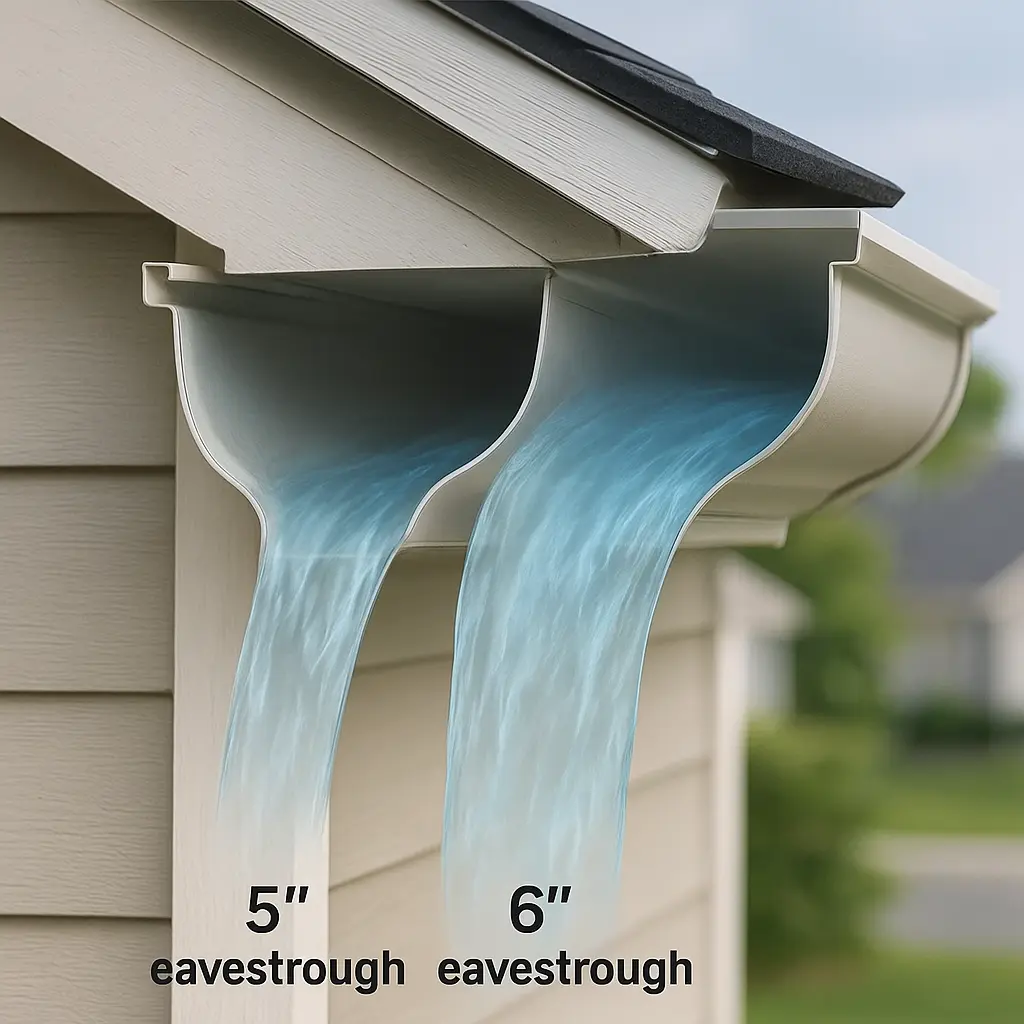
Calgary homeowners underestimate the volume of water their roofs shed during spring thaw. A standard 5-inch eavestrough can handle approximately 2,500 square feet of roof surface under normal conditions, but Alberta's heavy snowmelt seasons routinely exceed that capacity by 40% or more. When snow accumulation on a typical Calgary roof melts rapidly during Chinook events or spring warming, the resulting water flow overwhelms undersized gutters, causing foundation damage, basement flooding, and ice dam formation. Installing 6 inch eavestrough Calgary systems solves this problem by increasing water capacity by nearly 50% compared to standard systems, protecting your home's structural integrity during the most critical runoff periods.
Table of Contents
Quick Takeaways
Key Insight
Explanation
6-inch systems handle 50% more water
Oversized gutters Alberta systems move 3,750+ square feet of roof drainage versus 2,500 for standard 5-inch systems
Chinook events create 3-4x normal flow
Temperature swings of 20-30°C in 24 hours generate surge volumes that overwhelm standard eavestrough capacity
Foundation repair costs $8,000-$15,000
Water overflow from undersized gutters causes soil saturation and basement seepage, far exceeding eavestrough upgrade costs
Seamless construction reduces leak points
Custom-manufactured 6-inch systems eliminate seams every 10 feet, preventing failure during high-volume events
Proper pitch requires professional calculation
6-inch systems need 1/4 inch slope per 10 feet, adjusted for fascia condition and roof pitch to maintain flow velocity
Downspout sizing must match gutter capacity
6-inch eavestroughs require 3x4 inch or larger downspouts, not standard 2x3 inch, to prevent bottlenecking
Calgary gutter capacity planning uses snow load data
Southern Alberta receives 120-140 cm annual snowfall, creating spring melt volumes standard systems cannot handle
Understanding Calgary Snowmelt Volume
Calgary's climate produces unique water management challenges that most homeowners only recognize after damage occurs. The city receives an average of 128 cm of snow annually, with most accumulation happening between November and March. Unlike coastal climates where precipitation falls as rain throughout the year, Calgary concentrates months of moisture into a compressed spring melt period.
A 2,000 square foot roof collects approximately 1,250 gallons of water for every inch of rain equivalent. When 30-40 cm of snow melts over 3-5 days during a typical April warm spell, that translates to roughly 3-4 inches of water equivalent, generating 3,750 to 5,000 gallons that must drain through your eavestrough system. Standard 5-inch gutters simply cannot evacuate this volume fast enough.
Pro tip: Calculate your roof's square footage by measuring length times width for each section, then add 20% to account for pitch. This total determines whether you need oversized gutters Alberta systems or can manage with standard sizing.
Snow Density Creates Hidden Volume
Fresh powder snow contains roughly 5-10% water by volume, but the dense, compacted snow typical of Calgary winters after multiple freeze-thaw cycles contains 20-30% water content. This means the snow sitting on your roof in March holds far more water than its depth suggests.
In practice, we see homeowners surprised when 15 cm of March snow produces more runoff than 30 cm of December powder. The older, denser snow releases water rapidly during Chinook events, creating surge conditions that exceed the design capacity of standard eavestrough systems by a significant margin.

Capacity Differences Between 5-Inch and 6-Inch Systems
The physics of water flow demonstrate why a one-inch diameter increase produces disproportionate capacity gains. A 5-inch eavestrough has a cross-sectional area of approximately 19.6 square inches, while a 6-inch system provides 28.3 square inches. That 44% increase in area translates to roughly 50% more water handling capacity when properly pitched.
More importantly, 6 inch eavestrough Calgary installations maintain flow velocity during peak events. When gutters fill beyond 75% capacity, water velocity drops dramatically, increasing the likelihood of overflow at seams and end caps. Oversized systems operate at 50-60% capacity during the same surge events, maintaining laminar flow and preventing spillover.
System Specification
5-Inch Standard Eavestrough
6-Inch Oversized System
Maximum roof coverage
2,500 square feet
3,750 square feet
Peak flow rate (gallons/minute)
180-200 GPM
280-300 GPM
Recommended downspout size
2x3 inch rectangular
3x4 inch rectangular
Overflow threshold (% capacity)
75-80% during surge events
50-60% during same events
Typical installation cost (per linear foot)
$7-$12
$12-$18
Expected service life
15-25 years
Why Seamless Construction Matters More at Larger Sizes
Sectional gutters joined every 10 feet create weak points that fail under pressure. When a 5-inch sectional system overflows, it typically leaks at joints. When a 6-inch sectional system fails, the increased water volume causes explosive joint separation, dropping hundreds of gallons directly against your foundation.
Custom-manufactured seamless eavestroughs eliminate these failure points entirely. A continuous run from corner to corner handles surge pressure uniformly, preventing the catastrophic joint failures we regularly see with sectional installations during heavy snowmelt seasons.
How Chinook Winds Create Surge Events
Chinook winds distinguish Calgary's climate from other cold-weather cities. These warm Pacific air masses can raise temperatures by 20-30°C within 24 hours, triggering rapid snowmelt that standard gutters cannot accommodate. A typical February Chinook transforms rock-hard snowpack into flowing water in hours, not days.
The data consistently shows that Chinook-induced melt events generate 3-4 times normal spring runoff rates. When temperatures jump from negative 20°C to positive 10°C overnight, you get simultaneous melting across your entire roof surface. This creates peak flow conditions that persist for 6-8 hours, overwhelming any eavestrough system operating near its design capacity.
A common mistake is sizing eavestroughs for average spring melt conditions rather than worst-case Chinook scenarios. Calgary homeowners need snowmelt protection systems designed for surge events, not typical weather patterns.
Ice Dam Formation with Undersized Systems
When 5-inch gutters cannot evacuate meltwater fast enough during Chinook events, water backs up and refreezes overnight as temperatures drop. This creates ice dams that block subsequent drainage, forcing water under shingles and into your attic or wall cavities.
Six-inch systems maintain sufficient flow to prevent standing water accumulation. Even when temperatures plunge after a warm afternoon, the reduced water volume in properly sized gutters minimizes ice dam formation and the resulting interior water damage.
Pro tip: Inspect your eavestroughs after the first major Chinook of winter. If you see ice buildup or icicle formation at downspouts, your system lacks the capacity for Calgary's climate and should be upgraded before spring melt season.
Installation Considerations for Oversized Gutters
Installing oversized gutters Alberta systems requires different techniques than standard eavestrough replacement. The increased weight of a 6-inch system filled with water demands stronger mounting hardware and closer hanger spacing. Standard installations place hangers every 24 inches, but 6-inch systems need support every 18-20 inches to prevent sagging.
Fascia condition becomes critical with larger gutters. A 6-inch eavestrough filled with water and spring slush can weigh 8-10 pounds per linear foot. Deteriorated or undersized fascia boards cannot support this load, requiring replacement or reinforcement before eavestrough installation. This adds cost but prevents catastrophic failure during peak snowmelt.
Proper Pitch Calculation
Six-inch eavestroughs need 1/4 inch of slope per 10 feet of run to maintain adequate flow velocity. Too little pitch causes standing water and debris accumulation. Too much pitch creates turbulence that reduces effective capacity and accelerates wear at downspout connections.
In practice, we adjust pitch calculations based on roof area and expected flow volumes. A 40-foot run draining a 3,000 square foot roof section needs slightly more aggressive pitch than the same length serving 2,000 square feet. Professional installers measure existing fascia slope and account for settling before determining final hanger placement.
Downspout Placement and Sizing
The most expensive eavestrough system fails if downspouts create bottlenecks. A 6-inch gutter requires 3x4 inch rectangular downspouts or larger, positioned every 30-35 feet of run. Standard 2x3 inch downspouts restrict flow like putting a garden hose on a fire hydrant.
Downspout placement must account for foundation drainage and grade. Water exiting downspouts needs to flow away from the foundation at minimum 6 feet, preferably into proper drainage systems. Calgary's clay-heavy soils retain moisture, making proper downspout termination critical for foundation protection.
Cost Analysis: Investment Versus Damage Prevention
A complete 6-inch eavestrough system for a typical Calgary single-family home costs $2,800-$4,500 installed, depending on home size and configuration. That represents roughly 40-50% more than a standard 5-inch system replacement. This premium causes some homeowners to choose undersized gutters, a decision that proves expensive when damage occurs.
Foundation repair from water infiltration averages $8,000-$15,000 in Calgary. Basement waterproofing runs $3,000-$7,000. Interior water damage remediation starts at $2,500 for minor incidents and exceeds $10,000 for extensive mold removal and structural repairs. A single avoided foundation repair pays for oversized eavestrough systems several times over.
Long-Term Value Beyond Damage Prevention
Six-inch systems last longer than standard eavestroughs because they operate at lower capacity percentages during normal conditions. Reduced wear on hangers, seams, and downspout connections extends service life by 20-30%. The heavier gauge aluminum typically used for oversized systems resists denting and degradation better than standard 0.027-inch material.
Home resale value benefits from properly sized eavestrough systems, particularly in Calgary where informed buyers recognize climate-appropriate exterior systems. Disclosure requirements in Alberta mean sellers must report previous water damage, making prevention through adequate Calgary gutter capacity a sound financial decision beyond immediate protection.
Frequently Asked Questions
How do I know if my home needs 6-inch eavestroughs instead of standard 5-inch?
Calculate your roof's square footage for each section draining to a single downspout run. If any section exceeds 2,500 square feet, or if your home has experienced overflow, ice dams, or foundation water issues during spring melt, you need 6-inch systems. Calgary's climate makes oversized gutters the correct choice for most homes over 1,800 square feet with standard roof pitches.
Can I install 6-inch eavestroughs on my home myself?
While technically possible, seamless 6-inch systems require specialized equipment to manufacture and install properly. The increased weight demands precise hanger placement and fascia assessment that DIY installations typically miss. Improper pitch or inadequate support causes premature failure, and most homeowners lack the tools to fabricate seamless sections longer than 10 feet. Professional installation costs $8-12 per foot more than DIY but includes proper sizing, pitch calculation, and warranty coverage.
Do 6-inch eavestroughs look disproportionate on smaller homes?
Modern 6-inch eavestrough profiles maintain proportional appearance while providing increased capacity. The visual difference between 5-inch and 6-inch systems is minimal from ground level, typically unnoticeable unless directly compared. Function should drive sizing decisions in Calgary's climate. A proportionally smaller gutter that overflows during snowmelt causes far more aesthetic problems than a slightly larger system that protects your home properly.
What maintenance do 6-inch eavestroughs require compared to standard systems?
Larger gutters actually require less frequent cleaning because debris accumulation impacts capacity less significantly. A 5-inch gutter loses 30-40% capacity when 2 inches of debris accumulates, while a 6-inch system loses only 20-25% capacity with the same debris level. Plan for professional cleaning twice annually regardless of size, in late spring after seed drop and late fall after leaf season. Gutter protection systems work more effectively on 6-inch eavestroughs because the increased depth allows better screen or guard installation.
How long does it take to install 6-inch eavestroughs on a typical Calgary home?
A professional crew installs 6-inch seamless eavestrough systems on a standard single-family home in 1-2 days depending on configuration complexity. Homes requiring fascia repair or with multiple roof levels take longer. The installation timeline should never drive your decision, as proper eavestrough protection lasts 25-30 years. Rushing installation to save a day compromises pitch accuracy, hanger placement, and downspout positioning, creating problems that persist for decades.
Will 6-inch eavestroughs prevent all ice dam formation during winter?
Oversized eavestroughs significantly reduce ice dam formation by evacuating meltwater before it can refreeze, but they do not eliminate the problem entirely if attic insulation and ventilation are inadequate. Ice dams form when heat loss through your roof melts snow that refreezes at the cold eave edge. Proper eavestrough sizing handles the resulting water flow, but addressing attic heat loss through insulation upgrades provides complete ice dam prevention. A 6-inch system manages symptoms effectively while you address root causes.
What has your experience been with eavestrough capacity during Calgary's spring melt season, and have you encountered overflow or foundation issues with standard-sized systems?


Comments